Services for StudentsLeadership, Involvement & Volunteer Experience

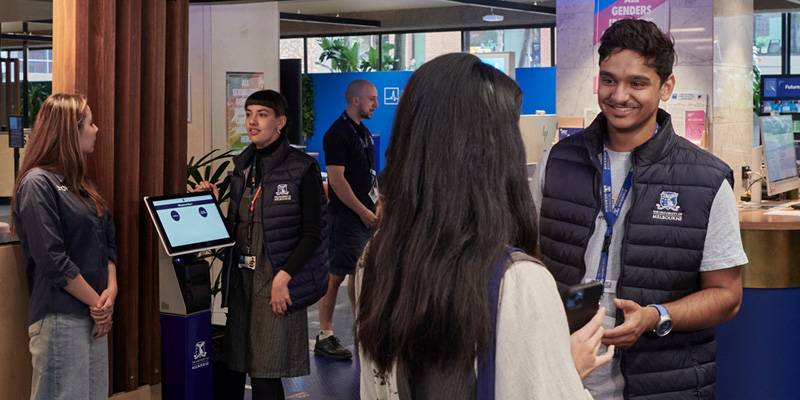
A student orientation host with his group
Getting involved in leadership and volunteering activities is a great way to meet other students.

Leaders in Communities Award FAQ's

Eligibility

1. Are there any pre-requisites for undertaking the Award?

There are no pre-requisites required to undertake the Award. The Award will attract a diverse group of students with varying experiences. The Award is flexible enough to enable you to choose challenges and activities which suit your need and interests.

2. Can students that are currently undertaking SALP or Dukes also do the Award?

Yes. However, activities that are undertaken as part of SALP and/or Dukes cannot be counted towards the Leaders Award components. For example, if you are enrolled in SALP and the Leaders Award you will need to complete a minimum of 120 hours of community volunteering, ie., 40 hours for SALP AND 80 hours for the Leaders Award.

3. I’m a graduate student, am I eligible?

Yes.

4. What if I go overseas, can I resume the Award when I get back to Australia?

You can still undertake activities for Volunteer Ventures and Professional Development sections of the Award while you are overseas. You must provide up-to-date information and contact details of these overseas activities, as you would if you were volunteering locally.

5. Do I have to be enrolled full time in order to undertake the Award?

No, regardless of your enrolment status, you may register for the Award. The important thing to consider is whether you are able to complete all the requirements of the Award before your complete your studies at the University of Melbourne. This is important if you want to have the Award noted on your academic transcript.

6. How will you know if I have actually completed all the requirements of the Award, and not just made up my hours?

Trust and honesty place a big part in this Award. We place a heavy responsibility on participants to be honest and to undertake the Award accurately, demonstrating a high level of respect and integrity. It is your responsibility to familiarise yourself with the requirements of the Award before registering, to register for the Award, choose activities under each respective section and participate and record your participation online honestly and accurately. The onus is solely on you to be honest and accurate when submitting your submissions online. Whilst we do not regularly monitor your progress, we do conduct random checks and contact students if we identify any discrepancies. In the end, should you decide to cheat and/or take the easy way out with this Award, then the only person you are actually fooling and cheating is yourself. The Award provides a unique opportunity for you to demonstrate your independence, commitment and initiative and self-drive towards achieving the Award to the highest quality. Once you have decided to undertake the Award, commit yourself to fulfilling all the requirements honestly with high integrity, aiming to get the most out of your experiences.


Managing your participation

1. When can I start the program?

You can register for the Award and can commence activities for each component at any time while you are enrolled in a University of Melbourne course. You should allow yourself a minimum of 6 months (if claiming some prior recognition of activities) to complete the Award.

2. Is there a time limit for completing the Award (i.e. months, years etc)?

The Award is flexible with no limit on the time you can take to complete the Award as long as you are an enrolled student. If you want the Award noted on your Academic Transcript of Results at the end of the semester you must have completed all components and submitted your online forms/ reports by the last date of the examination period for that semester – check the University’s Academic Calendar for dates.

3. What if I can’t finish the Award or complete all the sections?

There are no penalties for not completing. Even if you complete just one section of the Award you may find that you have had a significant experience and perhaps gained new or enhanced existing skills and attributes.

4. Can I include activities already commenced?

Yes. Activities undertaken prior to your registration can be counted, as long as you can show evidence of having undertaken the activity. The following time-limits apply for each section:
Volunteer Ventures – up to 6 months before registering for the Award
Uni Action – up to 12 months before registering for the Award
Professional Skills – up to 12 months before registering for the Award

5. Can I volunteer for more than one organisation for the Volunteer Ventures section?

Yes, you are able to volunteer with one or more not-for-profit community organisations. For example, you can volunteer in aged care for 3 months and then volunteer for a conservation organisation and count the hours for both, as part of the Volunteer Ventures component. You should negotiate the amount of time and duration of volunteering with the organisations, prior to commencing your volunteering.

6. Do I have to do all the sections at the same time or can I choose to do one section at a time?

As the Award is self-directed it is up to you as to how you would like to undertake each section. Some students may find that volunteering and attending learning activities on a regular basis works better, whilst other students may find that completing activities over a shorter period of time (but more intensively), for example, during the holidays, is a more suitable option.

7. Who will sign-off on my participation in each section?

No-one is required to sign-off on the hours you claim. You are required to provide correct and current details of the organisation you volunteer with via the Award database as well as the volunteer/activity coordinator so that the Award Coordinator can verify.

8. I am volunteer in a private hospital/nursing home. Can I count this towards my Volunteer Ventures section?

While volunteering should occur within a not-for-profit organisation, there are some exceptions which can be made for the purposes of recognising students’ commitment via the Leaders in Communities Award. In the case of a private hospital, nursing home or independent school, you will need to demonstrate that the volunteer role you are undertaking is distinctly different to a paid role and it is part of the organisation’s structured volunteering program. If you are a part of a structured volunteering program there should be a position description which clearly defines the aims of the volunteer program and the parameters and responsibilities of your role. If you are unsure, please contact us at leaders-info@unimelb.edu.au

9. If I start the Award in one degree, and transfer to another degree, can I continue to complete the Award (if both are at the University?) Or must it be completed during one degree only?

As long as you are enrolled at the University of Melbourne, regardless of whether you are transferring from degree to another, you can continue to complete the Award. The Award is undertaken independently and not linked to any degree or subject offered at the University of Melbourne.

10. If I defer, can I still continue to undertake activities towards the Award?

Yes, provided your enrolment at the University of Melbourne is still active. As long as you intend on returning to study at the University of Melbourne, then you can continue to undertake the Award and record your participation online.

11. Can I undertake activities while I am on a Leave of Absence?

Yes, as long as your enrolment remains active at the University of Melbourne and you intend to return to your studies after your Leave of Absence.

12. Is there a minimum time to complete the award? Although it states that I should allow myself a minimum of 6 months, can I complete it quicker than this?

The Award doesn’t have any specific time-frame for completion. What’s important is recognising that the requirements of the Award can be demanding and require commitment. You will need to consider your timetable, study commitments, possible employment and social pursuits when deciding to register for the Award. Undertaking the Award should not place additional burdens or demands on you and negatively impact on your studies; rather it should complement and enrich your learning and experiences.


Resources and Support

1. Is funding available to assist with this program?

There is no funding to assist with this program as there is no cost to register. While there may be some associated out-of-pocket expenses you may incur while volunteering with different community organisations as part of Volunteering Ventures, you should discuss reimbursement with the volunteer supervisor of those organisations. You should consider your own resources before choosing activities. While there are University grants available to apply for, most are distributed via a competitive process and therefore not guaranteed even if you apply. Refer to the LIVE website for details about university-wide awards, and check with your Student Centre for details of faculty/school/departmental grants.

2.How do I find activities for each section of the Award?

It's up to you to find activities for each section and there are a number of online resources to assist you with this on the Leadership and Volunteering website. Also keep an eye on the Student Portal and communications from your Student Centre, clubs and student associations for the full range of activities available on campus.

3. Do you monitor or supervise students that are undertaking the Award?

This is a self-directed Award and students are encouraged to complete the sections and undertake activities to suit their own needs while balancing their other commitments. There are a number of online resources that can assist in your search for volunteer opportunities. The Award Coordinator is also able to suggest options, advise you of your rights and responsibilities as a volunteer, provide encouragement and send you information about upcoming opportunities via a regular bulletin.

4. What is the host/activity supervisor’s role?

As a volunteer you have rights and responsibilities and conversely the organisation has legal obligations to its volunteers. At a most basic level, the volunteer coordinator (University or external) must provide appropriate orientation, induction, or training for the role, as well as appropriate supervision. Organisations must also provide volunteers with information the organisation’s policies and safe work procedures and any Environmental, Health & Safety requirements that are relevant to the volunteer’s role. For more information go to http://services.unimelb.edu.au/live/volunteer/what You must provide the contact details of the host organisation and supervisor, who can verify your volunteering hours, on the Award database. You should ensure that you discuss this with your supervisor as the Award Coordinator will conduct random checks, and it is good practice to communicate this with the organisation, as soon as you register for the Award.


Benefits

1. How does this program differ from other leadership programs at the university like The Duke of Edinburgh's Gold Award? Which one is better for me?

The Leaders in Communities Award is a University of Melbourne award and as such is only available to currently enrolled students at the University. Whilst there are some similarities with The Duke of Edinburgh's Award, there are also some distinct differences. For example, the Leaders Award allows more flexibility in completing volunteer hours over shorter periods of time; has a Uni Action component and has a reporting requirement for each component allowing students to reflect on each of their experiences.

2.How will the Award help my career development?

Participating in extra-curricular activities while at University is highly regarded by many graduate employers, as it demonstrates good time-management skills and initiative. Depending on the activities you volunteer in for each of the Award’s components, you may also have the opportunity to work with others, develop a project, mentor students, complete various high-level tasks or solve an ongoing problem which can help you further develop a wide range of skills, including communication, team-building, conflict-resolution and project management.

3. How is the Award officially recognised by the University?

Successful completion of the Award is recognised on your official Transcript of Results.

4. How is the Award awarded to successful students?

Achievement of the Award will only be accredited on the academic transcript. The University does not hold any formal ceremony.


Volunteer Ventures

1. Should I get my volunteering approved beforehand, so I know that the organisation which I have chosen will fit the criteria?

There is no need to get approval on your volunteer opportunity or the community group/organisation which you choose to volunteer with, as long as you are convinced that the group/organisation is a registered not-for-profit organisation, and has in place a formal volunteer program that satisfies the University of Melbourne’s guidelines for student volunteering.

2.Would rattling tins for saving whales, or coaching an under 10 football team count as volunteer activity under the Volunteer Ventures section?

When deciding on whether or not your choice of volunteering would count under the Volunteer Ventures, it is important to keep in mind that there are many groups and organisations in the community who provide opportunities for people to get involved, assist and contribute their time and skills. Some of these groups and organisations offer what is referred to as formal volunteering (I.e. The organisation provides a position description, training and orientation, volunteer policy etc), while other community groups/organisations offer what is commonly known as informal volunteering (such as helping out at the canteen of a local sporting club or helping out at a church). The important distinction to make is in determining whether the community group/organisation that you have chosen to volunteer with, is a not-for-profit group/organisation, and not a private company-which generates a profit for owners/share holders. A not-for-profit can also generate income, however, any money raised goes back into the organisation towards providing/improve their services, and not distributed to owners/shareholders. There are some restrictions on the type of volunteer activities that might not be accepted under the Volunteer Ventures sections including activities and events which denigrate, exclude or offend, encourage gambling or substance abuse, promote political parties, support individuals or organisations without community benefit, create environmental hazards or may present a hazard to the community and activities which do not reflect community standards.

3. Where can I find a volunteer position that will satisfy the criteria for Volunteer Ventures?

If you are unsure about where to volunteer or how to find a volunteer position, your first task should be to familiarise yourself with all you need to know about volunteering. You can do this at http://services.unimelb.edu.au/live/volunteer. Secondly, Volunteers Online is the University of Melbourne’s online portal for students to search for volunteer positions. All the organisations and positions on this database are checked and approved by the University. Additionally, you can search Govolunteer and SEEK Volunteer for approved volunteer positions. If you choose to volunteer with an organisation that is not listed on any of these online portals, then it is your responsibility to do all the necessary checks to ensure that the group or organisation satisfies the guidelines as stipulated in the University of Melbourne’s Guidelines for Student Volunteering.


Uni Action

1. Do all University of Melbourne clubs and societies count under Uni Action? (Eg. If I start up my own club, such as "Appreciation for Angry Birds" and organize lots of people to come and play Angry Birds together, will this count?)

Activities undertaken under the Uni Action section must encourage active participation and contribution to University activities. The example provided, whilst it may create connections between students, it cannot be accepted because it is regarded as a passive activity and does empower students to take action and/or develop their skills. Examples of approved Uni Action activities include, being a Secretary of a University club or society, being an active member of a student-led group (eg. SIFE) or being an Open Day Guide or orientation host.

2.Would recognition of prior experience under the Uni Action count if they were carried out before I enrolled at the University of Melbourne.

No, recognition of prior experience would only be accepted if the activity was undertaken whilst you were enrolled at the University of Melbourne.

3. As part of my involvement with a University program, I am volunteering with an external community organisation. Do I count this volunteering towards the Volunteer Ventures or Uni Action?

Only volunteering activities that are obtained with an external community organisation, independent of your involvement/connection with a University program or club/society can be counted towards Volunteer Ventures. (Eg. You apply and obtain a volunteer opportunity with a not-for-profit community organisation which you found on the University’s Volunteers Online or other online volunteering portal - such as Go Volunteer or Seek Volunteer). If the volunteer opportunity is obtained as a result of your involvement/connection with a University faculty program or student club/society (Eg. Robogals or SIFE), then this volunteering is counted towards the Uni Action (Eg. As a member of SIFE - Student’s in Free Enterprise, you are required to volunteer on a project with the Salvation Army). This volunteering would be counted towards Uni Action and not Volunteer Ventures.


Professional Skills

1. How will I know if the activity I that I choose will count towards the professional skills section? Example: Do I need to get the activity approved if it is not an example given on the Award website?

The activities approved under the Professional Skills must occur in a formalised setting either on campus or provided by an external organisation and outside of the curriculum. Examples of appropriate activities for this section may include attendance at the Global Perspectives Summit, workshops run by Careers and Employment and by Academic Skills, faculty programs like the Business and Economics First Year Leadership Program. Also, participation in activities, such as international leadership conferences, summits, forums, workshops, seminars or camps where the focus has been developing your leadership skills and graduate attributes can also be counted towards this section. Activities that are not accepted include training directly related to your volunteering and others, such as going to a community festival with a group of friends or attending general information seminars. If you are unsure about the appropriateness of an activity under the Professional Skills section, it is best to check with the Award Coordinator.

2.Can I count training that I have undertaken as part of my volunteering under the Volunteer Ventures or Uni Action towards the Professional Skills section (Eg. Host training or training to be a mentor for a community mentoring program)?

If the training is primarily geared towards your Volunteer Ventures or Uni Action (I.e. Compulsory in order for you to carry out your volunteering), then this type of training cannot be counted towards professional Skills. However, if the training is offered to you as separate from your direct volunteer role with your host community organisation, faculty program or student club/society (I.e. not directly related to your volunteer role) then this type of training can be counted towards the Professional Skills section because it is regarded as professional development beyond your volunteer role. (Eg. You are volunteering in an administration role with World Vision, and you do a workshop in counselling that is offered by World Vision, which is clearly not related to your volunteer role).


Reflective Report

1. Will I get marked on the Reflective Report?

The Reflective Reports are not formally marked, but each report is carefully read by the Award Coordinator prior to approval for accreditation on the academic transcript. Reports which clearly do not relate to the respective sections will not be accepted and the student will be contacted. The Reflective Report is a critical tool and forms an integral component of the Award. Apart from guiding you to reflect on your experiences, it empowers to put your experiences and contribution into perspective and to articulate and connect your findings and discoveries to your life.

2.Is there some sort of basic standard that I have to meet in writing the Reflective Reports (i.e. writing and grammar skills, structure etc)?

The guided questions under each Reflective Report are designed to enable you to reflect, gather, process and articulate your experiences in a meaningful and constructive way. The reports do not have any particular standard or expectation in relation to grammar or format, however, it is expected that the same care, attention and detail is given to the writing of Reflective Reports, as that afforded to any other important piece of writing (I.e. Assignments, essays, presentation material etc).


top of page